Part 1 of 5 · freeIntroduction
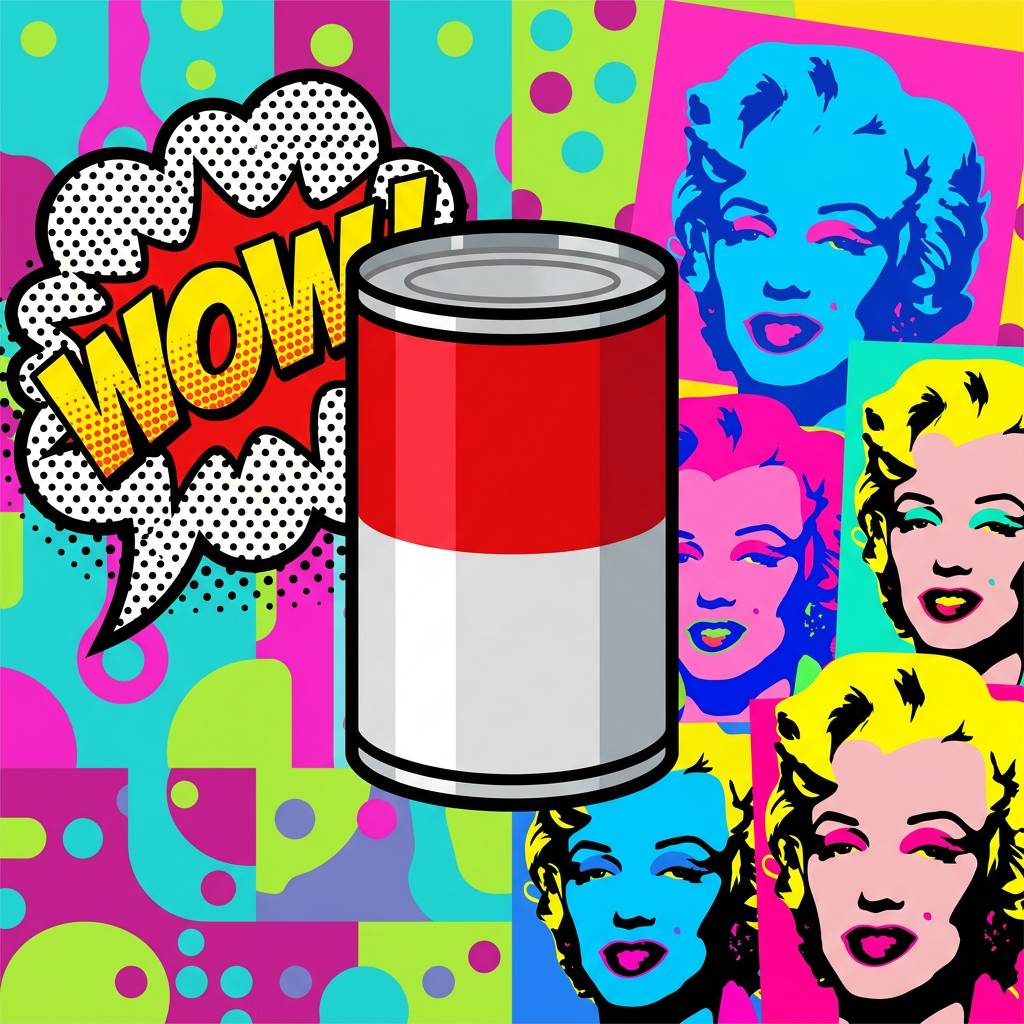
Pop Art, from the mid-1950s to the 1970s, answered the American consumer society of the 1950s-60s and its mass culture. Advertising, comic books, Hollywood stars: everything became material for art.
With Andy Warhol and Roy Lichtenstein, the wall between the museum and the supermarket came down. The everyday object became an icon. The value of the artwork and the role of the artist were both turned upside down.
The rest is in the Sophia app.The remaining parts, the open-book quiz and the full glossary. Free to start; Premium unlocks everything.
- 2From the everyday to the museum
- 3Warhol: the studio as a factory
- 4Lichtenstein: the comic strip blown up
- 5The legacy: from the market to social media
Open-book quiz9 questions whose answers are in the text.
Glossary11 terms explained in a tap.
30 languagesThe same course, from French to Japanese.