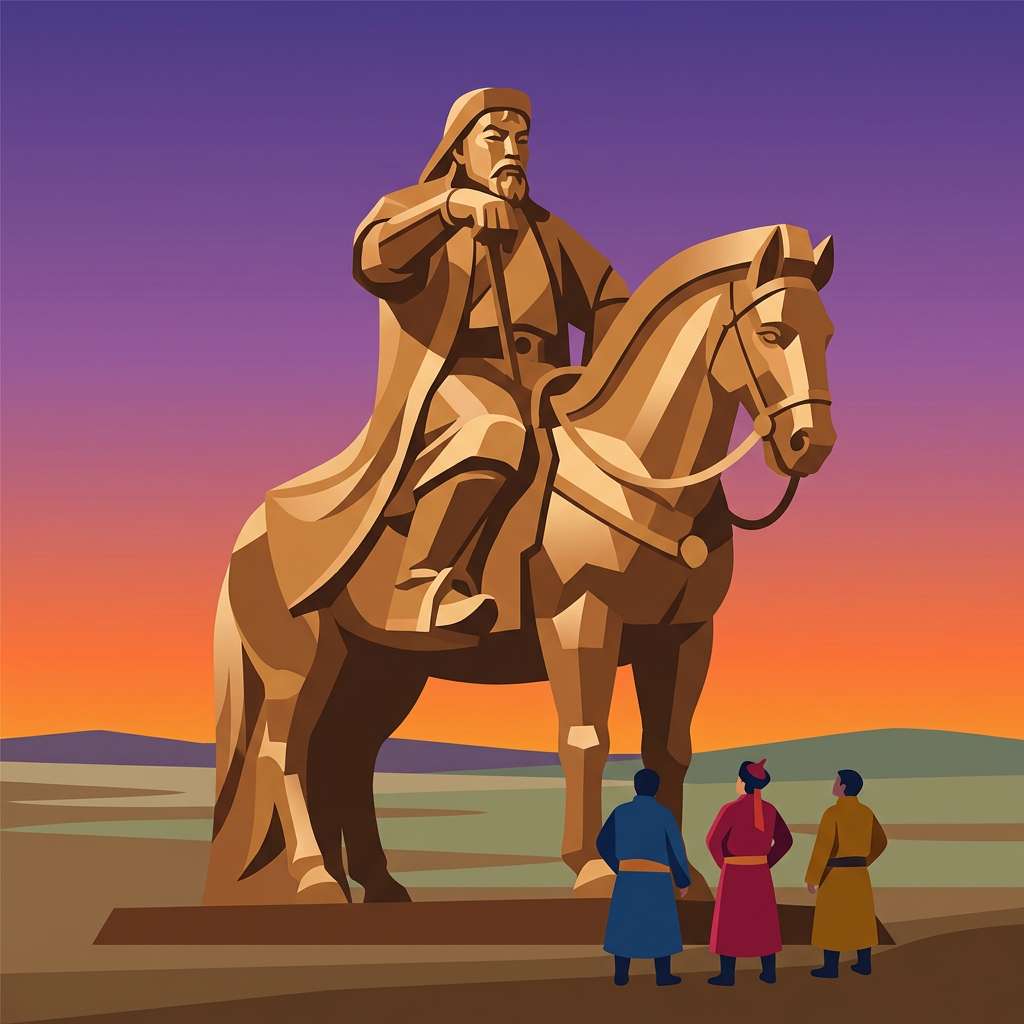
In the 12th century, a young boy named Temüjin lived on the Mongolian steppe. He was just nine years old when his father was murdered. Soon after, his own clan abandoned his family. Left to fend for himself, Temüjin grew up in hard conditions, with little protection or security.
That same boy would become Genghis Khan, ruler of the vast Mongol Empire. By his death in 1227, he had united the Mongol tribes and laid the foundations of an empire that would eventually cover around 12 million square miles. This feat was not simply the work of a powerful army. Genghis Khan developed a set of methods to unite people, control conquered territories and govern across enormous distances. So the real question is not what he conquered, but how he made it all possible.
- 2Loyalty over blood
- 3Religious tolerance as a tool of power
- 4The yam, the empire's relay network
- 5Fear as a weapon