Part 1 of 5 · freeIntroduction
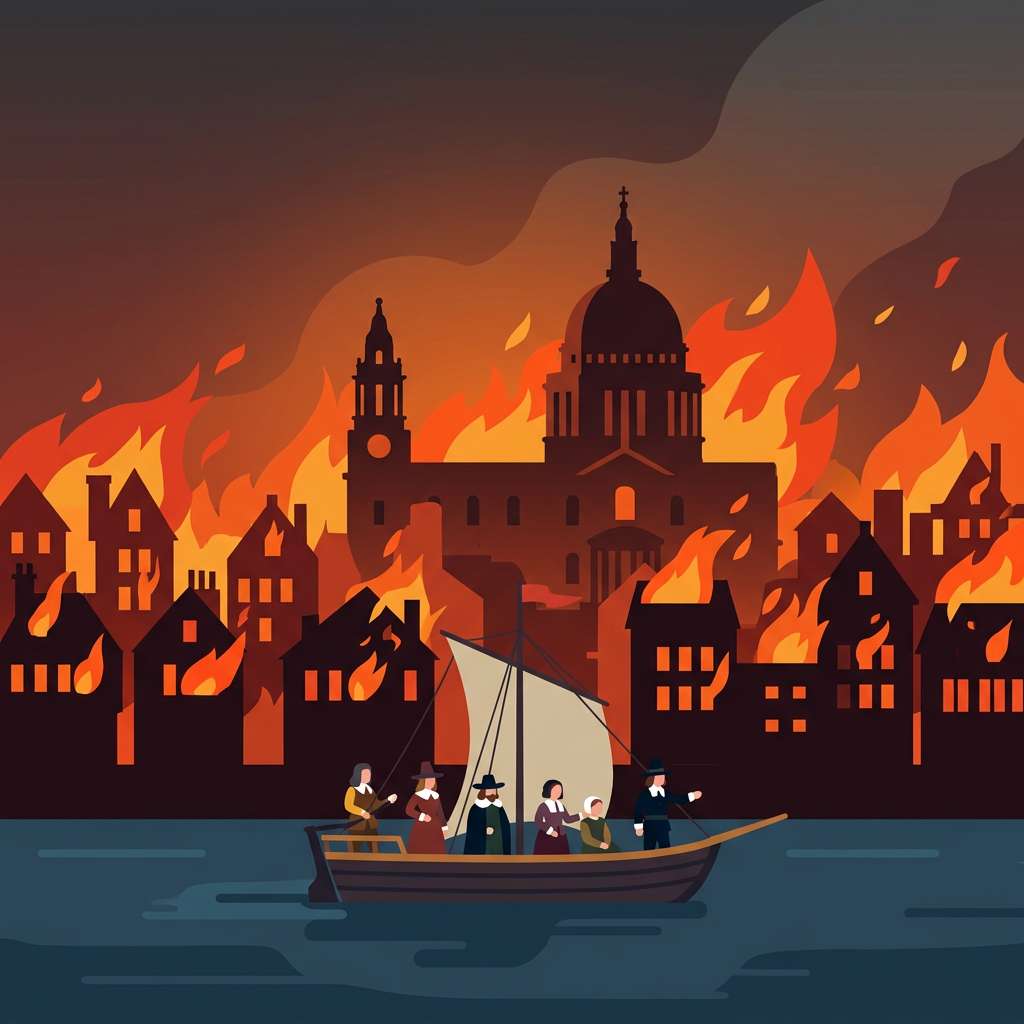
On September 2, 1666, a fire broke out in a bakery on Pudding Lane in London. What began as a small blaze became one of the most destructive fires in the city's history. The flames burned for four days, destroying around 13,000 houses and much of the medieval city, including St Paul's Cathedral.
Several witnesses of the time recorded the scale of the destruction, among them Samuel Pepys, a senior naval administrator and member of the British Parliament. In his diary, he described the fire spreading across London, the mounting destruction and the confusion of those trying to escape. But how did a fire that began in a bakery grow large enough to destroy most of the city?
The rest is in the Sophia app.The remaining parts, the open-book quiz and the full glossary. Free to start; Premium unlocks everything.
- 2A city of wood driven by the wind
- 3Why nobody could stop it
- 4Six deaths, really?
- 5London rebuilt in brick
Open-book quiz8 questions whose answers are in the text.
Glossary6 terms explained in a tap.
30 languagesThe same course, from French to Japanese.