Part 1 of 5 · freeIntroduction
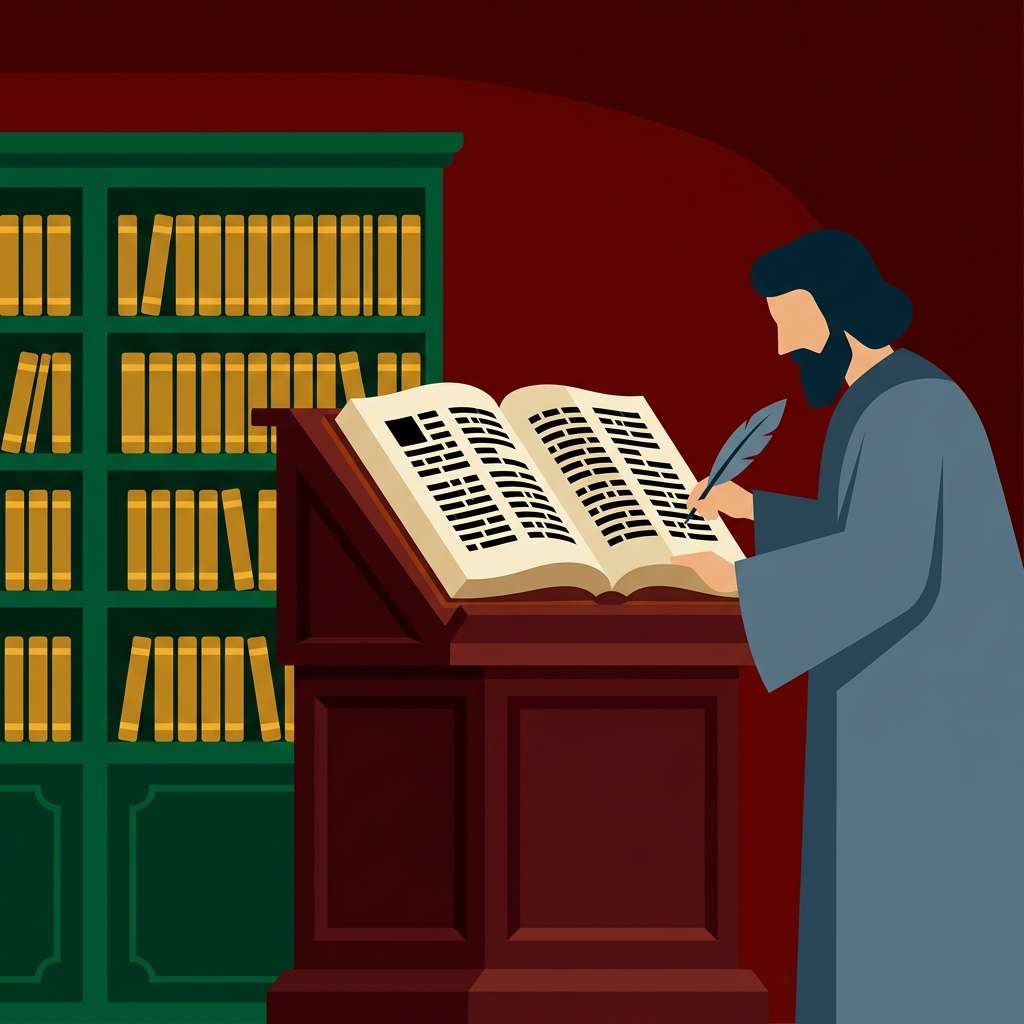
Long before the printing press, producing a book in Europe was slow and expensive work. Each volume was copied by hand by a trained scribe, who spent months, sometimes years, on a single manuscript. Books were therefore reserved for the wealthy, religious institutions and universities. Not because nobody else wanted them: making a single volume simply took an enormous amount of time and labor.
Then, in the middle of the 15th century, everything began to change. In Mainz, in Germany, a craftsman named Johannes Gutenberg developed a new printing system that revolutionized the making of books. His invention transformed more than the world of books: it changed how information could be copied and shared. Why did one press have such an effect?
The rest is in the Sophia app.The remaining parts, the open-book quiz and the full glossary. Free to start; Premium unlocks everything.
- 2Gutenberg did not invent printing
- 3Twenty million books in fifty years
- 4Luther and the Reformation in pamphlets
- 5From the telegraph to the Internet
Open-book quiz8 questions whose answers are in the text.
Glossary7 terms explained in a tap.
30 languagesThe same course, from French to Japanese.