Part 1 of 5 · freeIntroduction
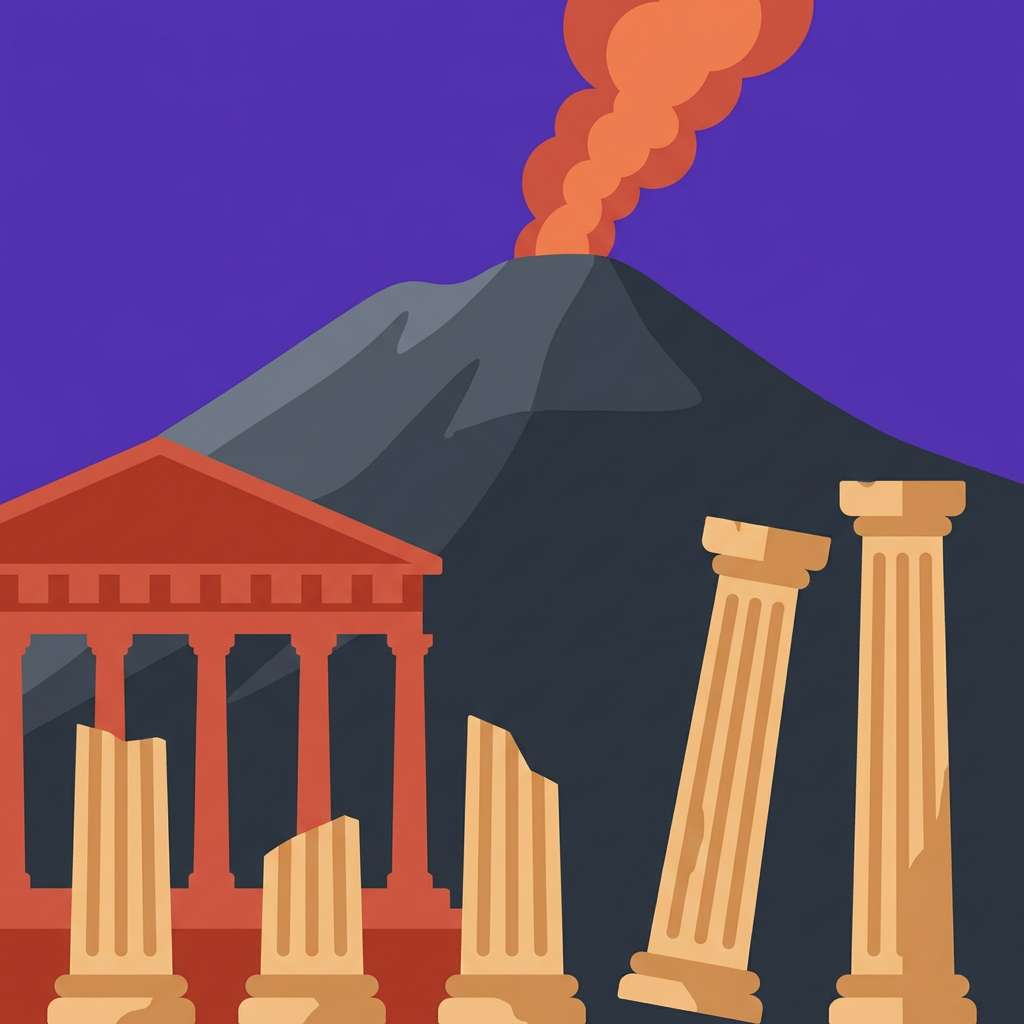
A roar, as if the sky were splitting open. Stones falling before anyone understood what was happening, roofs giving way like paper, a cloud of ash swallowing the daylight. Nearly 2,000 years ago, a bustling Roman city on the shores of the Mediterranean was buried in silence by the eruption of Vesuvius.
Campania, bathed by the calm waters of the Gulf of Naples, had long drawn poets, travelers and emperors. Its climate and fertile soil allowed three harvests a year and precious crops, vines and olive trees. The Greek geographer Strabo and a few high-ranking Romans knew that this wealth came from the mountain's volcanic past. Yet nobody expected a catastrophe.
The rest is in the Sophia app.The remaining parts, the open-book quiz and the full glossary. Free to start; Premium unlocks everything.
- 2A prosperous city at the foot of Vesuvius
- 3October 24, AD 79: the rain of pumice
- 4The burning cloud strikes a town like no other
- 5Excavations, plaster casts and ignored warnings
Open-book quiz8 questions whose answers are in the text.
Glossary6 terms explained in a tap.
30 languagesThe same course, from French to Japanese.