Part 1 of 5 · freeIntroduction
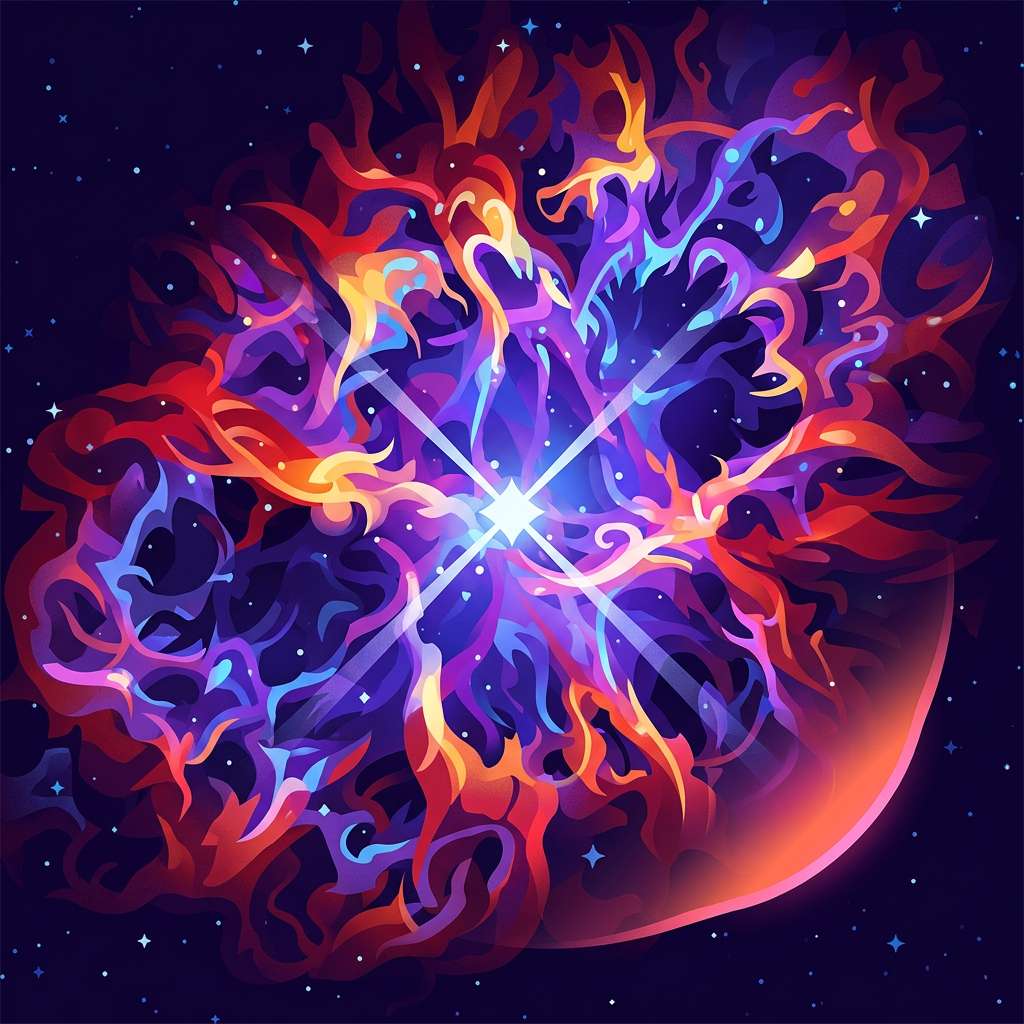
What actually makes a star die? A star begins to die when it can no longer hold itself up against its own gravity. For most of its life, gravity pulls its material inward. At the same time, the energy produced in its core creates pressure that pushes outward. These two effects cancel each other out, and the star stays stable.
That energy comes from nuclear fusion: hydrogen nuclei join together to form helium and release enormous amounts of energy. The balance can last for millions, billions or even trillions of years. It all depends on mass. Low-mass stars use up their fuel slowly, while massive stars burn through it much faster. One day, the balance breaks. What happens next depends on how massive the star is.
The rest is in the Sophia app.The remaining parts, the open-book quiz and the full glossary. Free to start; Premium unlocks everything.
- 2The star swells into a red giant
- 3A white dwarf the size of Earth
- 4Supernova, neutron star or black hole
- 5We are made of stardust
Open-book quiz8 questions whose answers are in the text.
Glossary7 terms explained in a tap.
30 languagesThe same course, from French to Japanese.