Part 1 of 5 · freeIntroduction
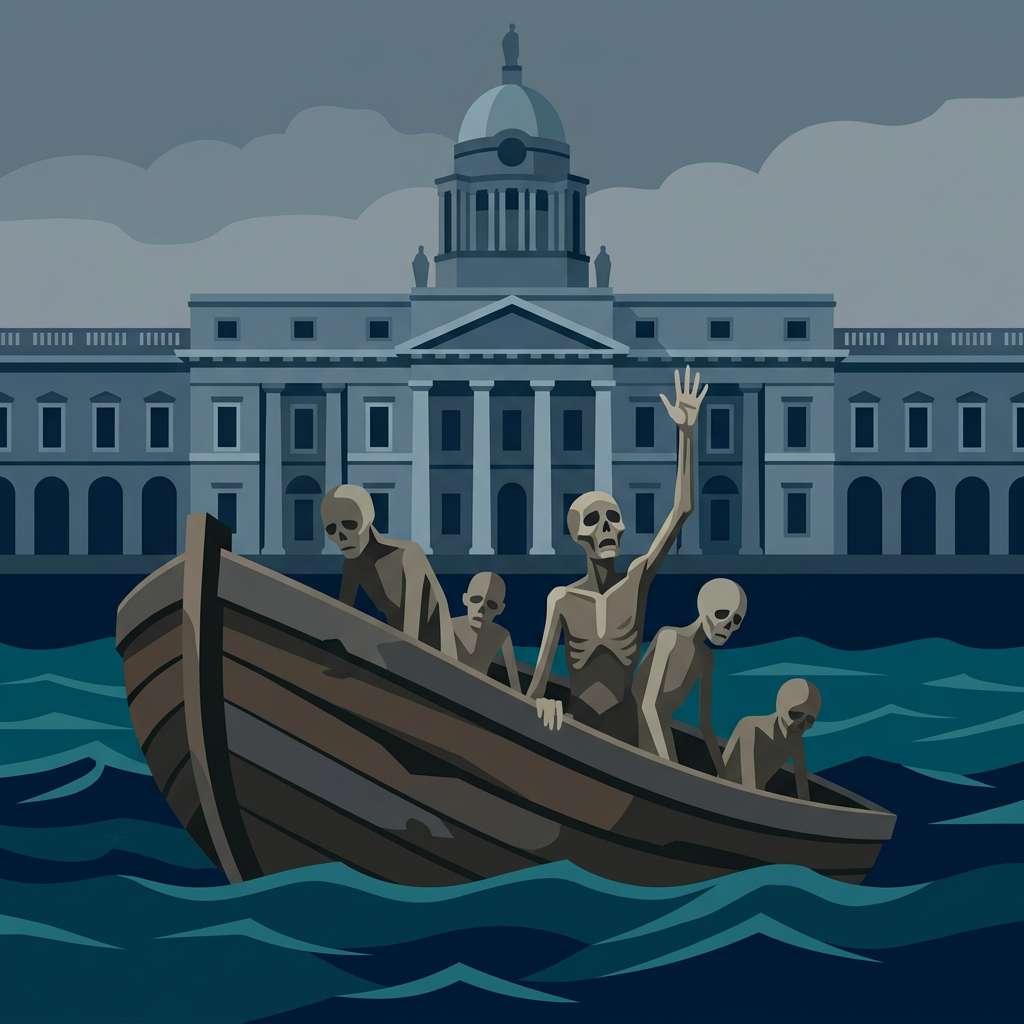
Between 1845 and 1852, the Great Famine killed about a million people in Ireland. The trigger was potato blight, a fungus-like mold that destroyed the crops and robbed the country of its most important food. Yet while Irish people starved, grain, livestock and butter kept leaving Irish ports on British ships, bound for British tables.
How could a country export food while it was starving? The question has haunted historians and Irish people ever since. Two readings stand opposed. The first sees these exports as a symbol of British exploitation. The second sees them as only one piece of a far more complicated picture, made of exports but also of imports.
The rest is in the Sophia app.The remaining parts, the open-book quiz and the full glossary. Free to start; Premium unlocks everything.
- 2Potatoes, farmers and the blight
- 3The exports: Christine Kinealy's case
- 4The imports: James Donnelly's reply
- 5The long shadow of the Great Famine
Open-book quiz8 questions whose answers are in the text.
Glossary6 terms explained in a tap.
30 languagesThe same course, from French to Japanese.