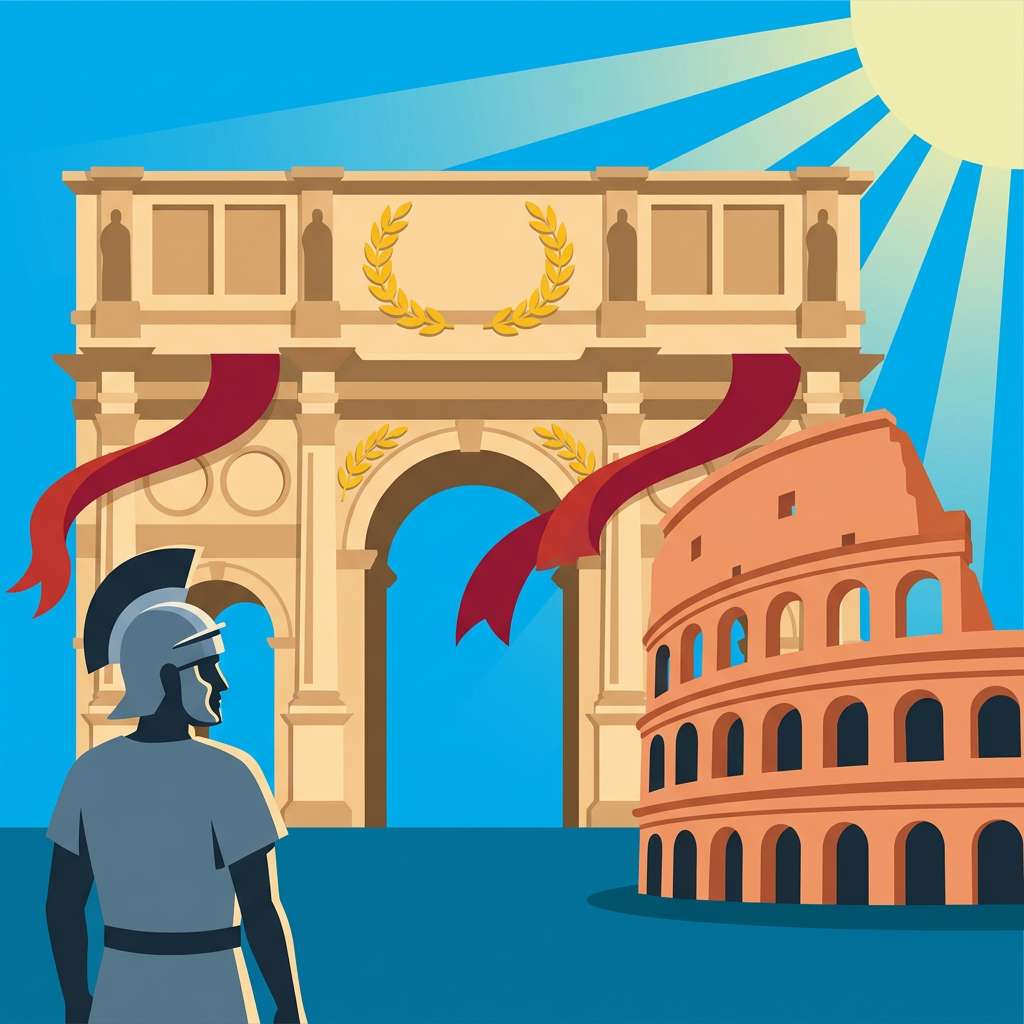
Part 1 of 5 · freeIntroduction
In 312, Constantine crushed his rival Maxentius at the Battle of the Milvian Bridge, at the gates of Rome. Now master of the Roman West, he began to support the Christians. The following year, with his fellow emperor Licinius, he issued the Edict of Milan: freedom of worship for Christians, and the return of the property confiscated from the churches during the persecutions.
The text made Christianity a lawful religion, not the official religion of the empire. The traditional cults remained permitted. Constantine funded churches and promoted Christians, but he left the old gods alone. How did this merely tolerated religion become, in under seventy years, the only faith recognized by the state?
The rest is in the Sophia app.The remaining parts, the open-book quiz and the full glossary. Free to start; Premium unlocks everything.
- 2Constantine and the Council of Nicaea
- 3An empire still pagan
- 4Theodosius imposes the faith of Nicaea
- 5A society changed to its core
Open-book quiz8 questions whose answers are in the text.
Glossary7 terms explained in a tap.
30 languagesThe same course, from French to Japanese.