Part 1 of 5 · freeIntroduction
Before Newton, a great deal was already known about the planets, thanks to Galileo, the Italian physicist of the 17th century, and Johannes Kepler, the astronomer who described elliptical orbits. What was missing was a clear link between what falls on Earth and what turns in the sky.
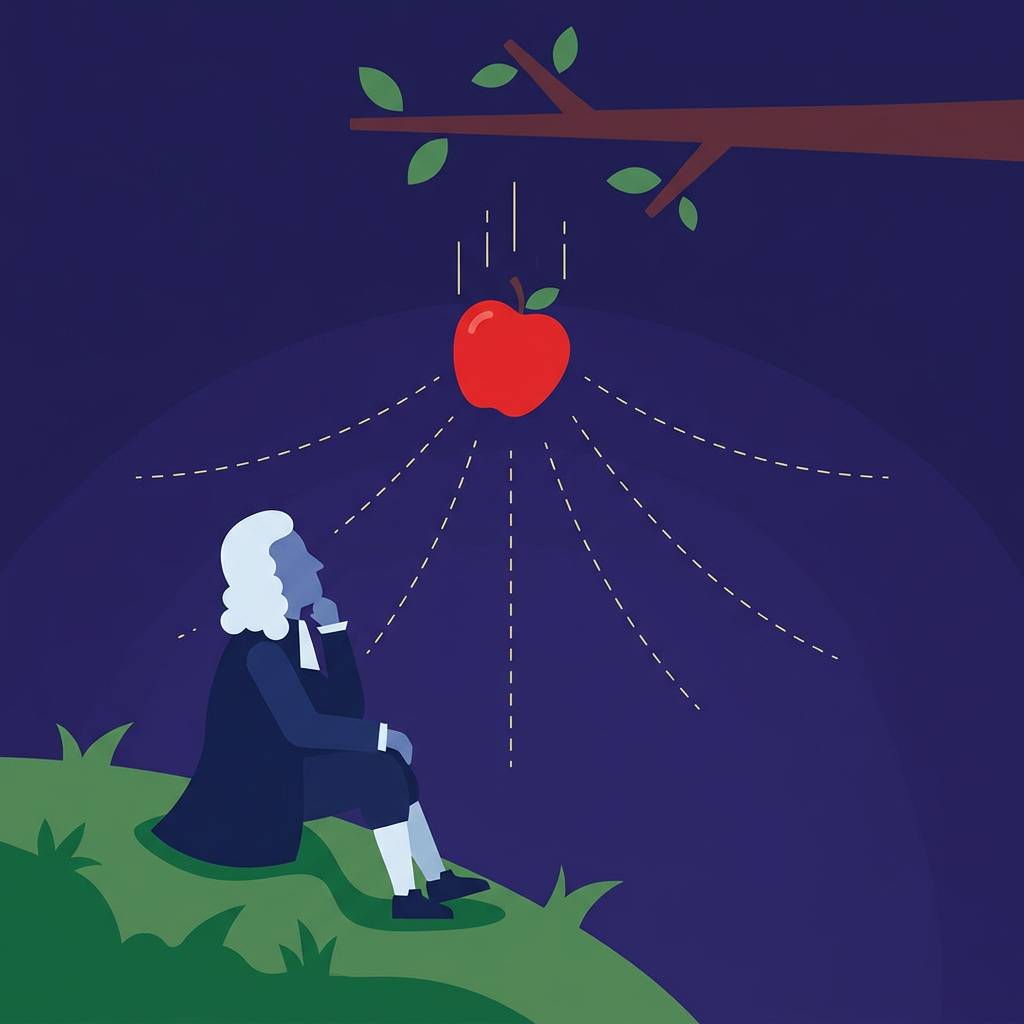
In 1687, Isaac Newton published the Philosophiae Naturalis Principia Mathematica, the Principia, the founding work of classical physics. In it he argued that gravitation is universal: it acts everywhere, and always in the same way.
The rest is in the Sophia app.The remaining parts, the open-book quiz and the full glossary. Free to start; Premium unlocks everything.
- 2The world before the synthesis
- 3The law in one sentence
- 4The laws of motion
- 5Powerful, but not the last word
Open-book quiz8 questions whose answers are in the text.
Glossary10 terms explained in a tap.
30 languagesThe same course, from French to Japanese.