Part 1 of 5 · freeIntroduction
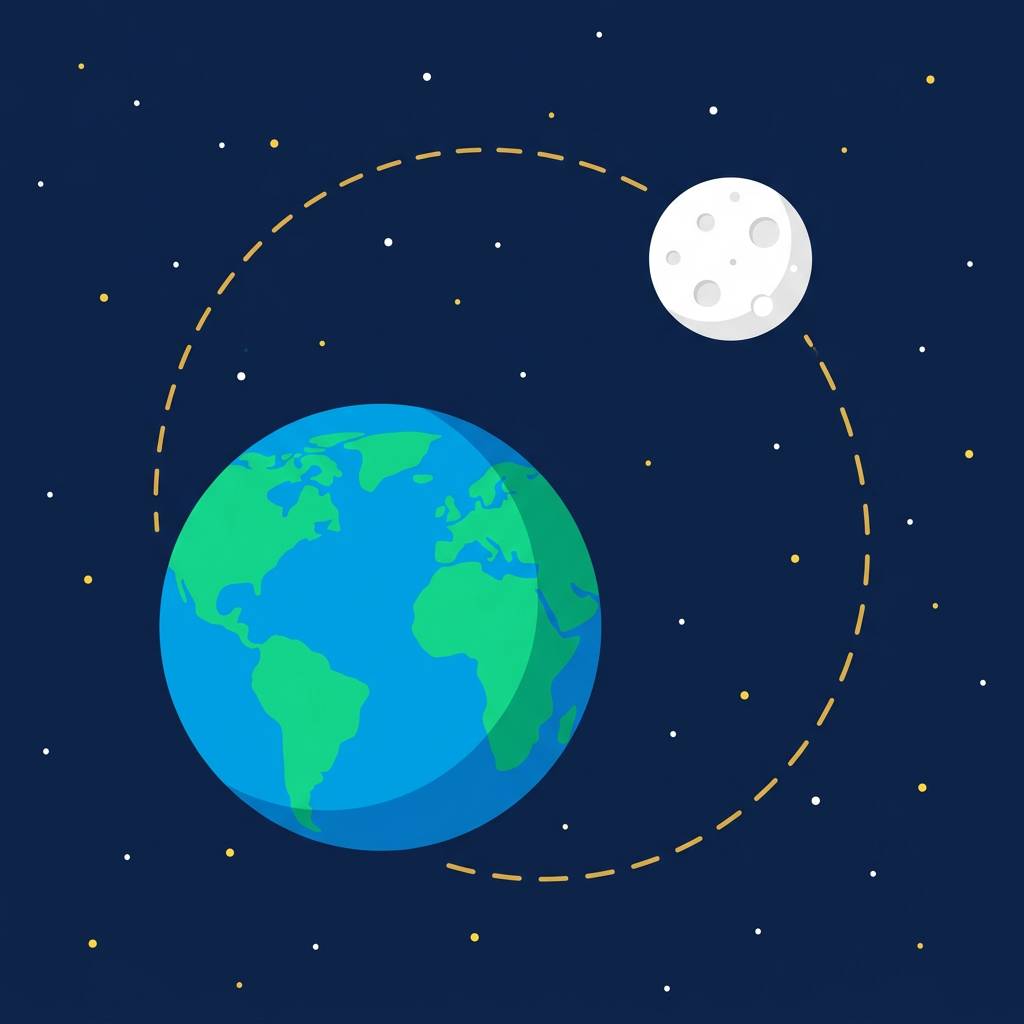
If the Earth's gravity pulls on the Moon, why does it not crash into us? The answer sounds odd: the Moon really is falling toward the Earth. It just misses, at every moment.
That balance between falling and moving sideways is an orbit, a curved path around a body. The English physicist Isaac Newton was the first to explain a falling apple and the motion of the planets with one and the same idea.
The rest is in the Sophia app.The remaining parts, the open-book quiz and the full glossary. Free to start; Premium unlocks everything.
- 2Newton's imaginary cannon
- 3Two forces, one balance
- 4The tides push the Moon away
- 5Eclipses, for now
Open-book quiz8 questions whose answers are in the text.
Glossary6 terms explained in a tap.
30 languagesThe same course, from French to Japanese.