Part 1 of 5 · freeIntroduction
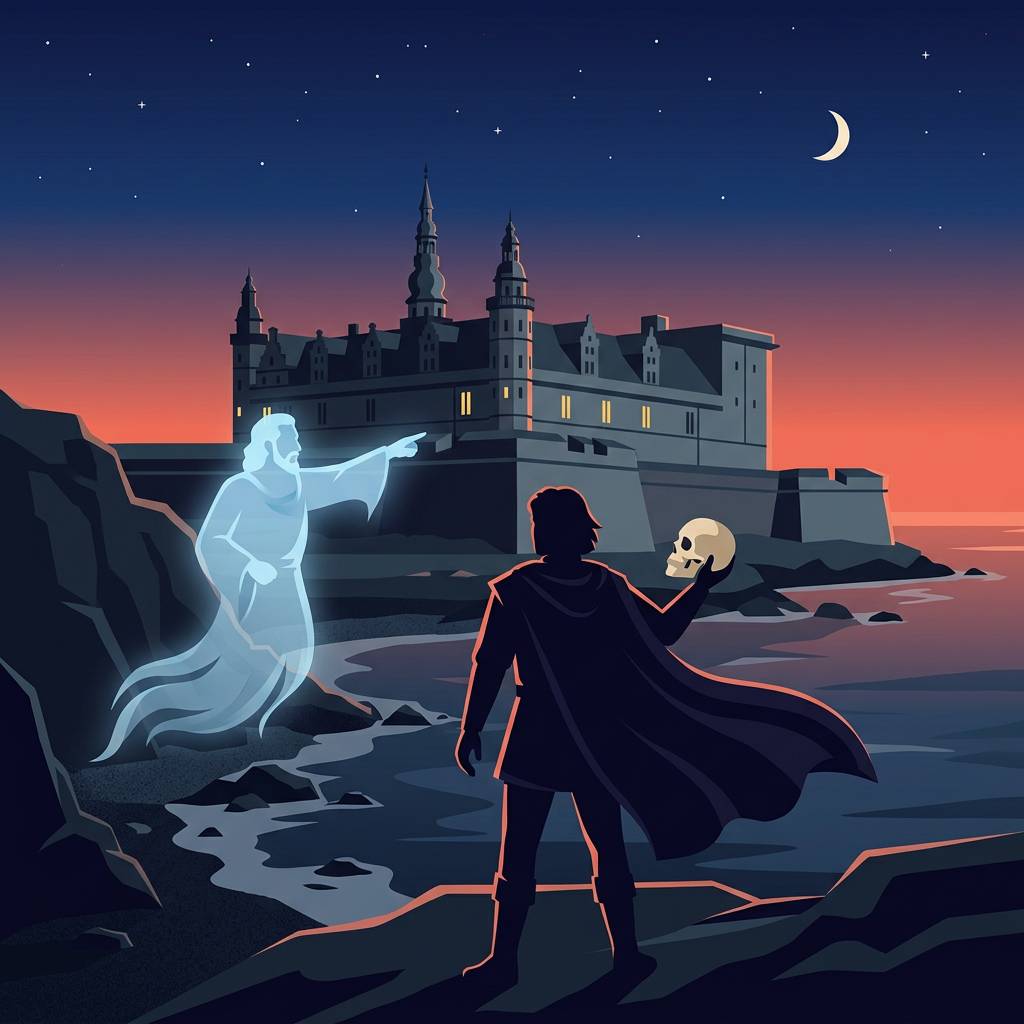
Around 1601, William Shakespeare wrote Hamlet, Prince of Denmark. It is more than a revenge tragedy: it is the portrait of a modern mind, torn between action and doubt. The soliloquy “To be or not to be” has become the great existential question of Western theater.
Ghosts, feigned madness, a final duel: the play mixes the supernatural with psychology long before psychology had a name. Hamlet is nothing like the impulsive heroes of classical drama, who strike at once. He thinks too much to act fast, and that is exactly what makes him immortal. Shakespeare invents a character who doubts everything, himself included.
The rest is in the Sophia app.The remaining parts, the open-book quiz and the full glossary. Free to start; Premium unlocks everything.
- 2The Elizabethan stage: a theater of the world
- 3The spiral of revenge and the weight of hesitation
- 4Melancholy and the rot of Denmark
- 5The legacy of a universal myth
Open-book quiz9 questions whose answers are in the text.
Glossary7 terms explained in a tap.
30 languagesThe same course, from French to Japanese.