Part 1 of 5 · freeIntroduction
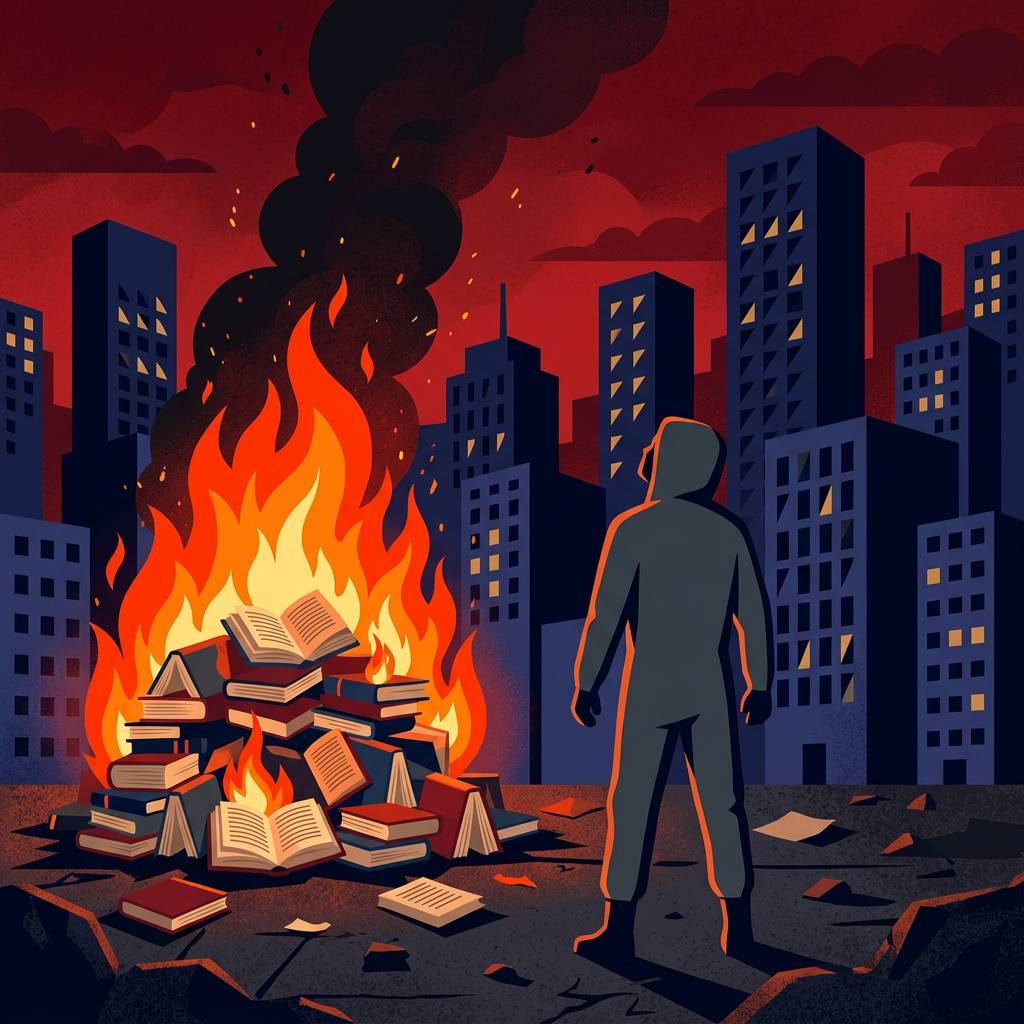
Published in 1953, Fahrenheit 451 is a pillar of the dystopia. That genre describes a future society where the individual is crushed. Ray Bradbury, born in 1920 and dead in 2012, imagines a future where firemen burn the books judged dangerous to social stability. The title names the temperature at which paper catches fire, about 233°C.
More than a critique of state censorship, the book shows a population that gives up reading of its own accord, in exchange for empty entertainment and instant technology. Bradbury's warning is simple: freedom of thought is lost through forgetting as much as through force.
The rest is in the Sophia app.The remaining parts, the open-book quiz and the full glossary. Free to start; Premium unlocks everything.
- 2How a visionary book was born under pressure
- 3The Montag system: knowledge on fire
- 4Resistance through memory: the book people
- 5Legacy and a warning about instant everything
Open-book quiz9 questions whose answers are in the text.
Glossary8 terms explained in a tap.
30 languagesThe same course, from French to Japanese.