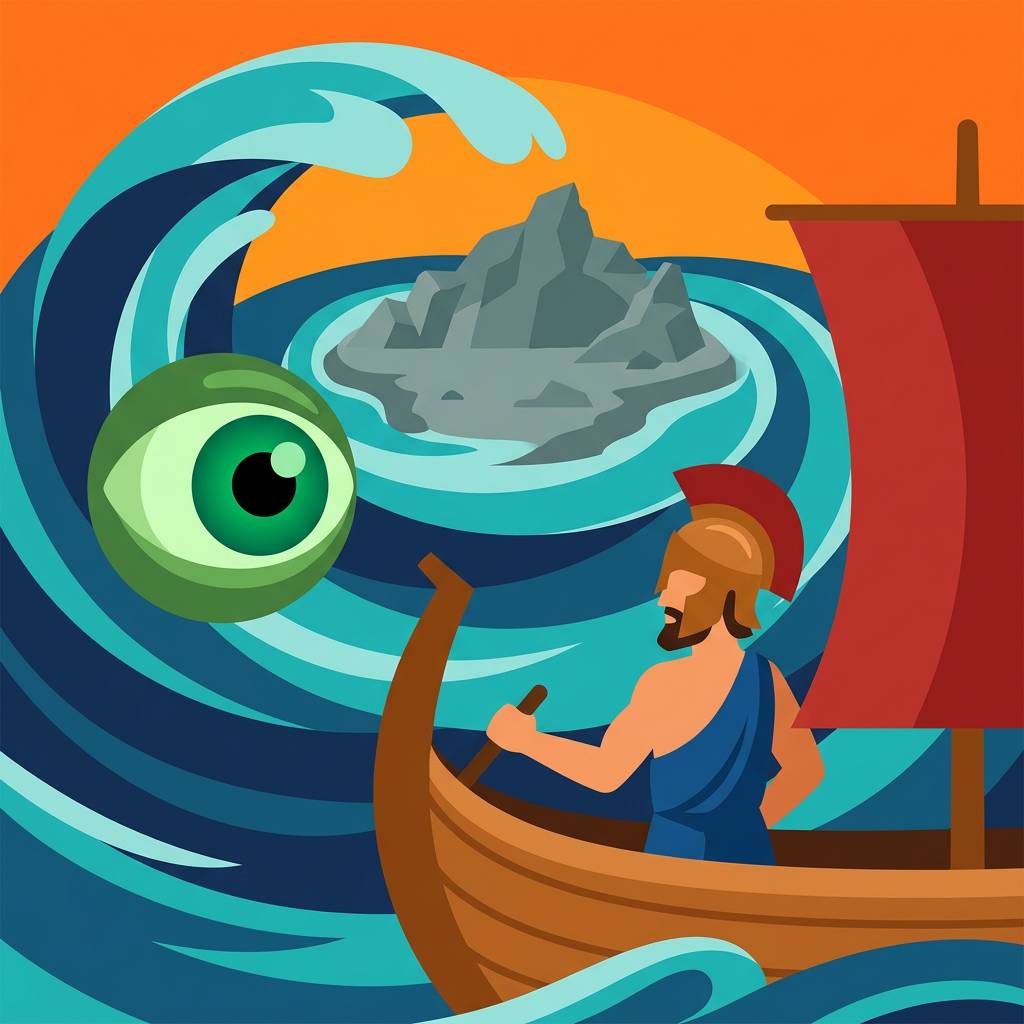
Around the 8th century BC, a long Greek poem tells the story of one man coming home. His name is Odysseus, king of the small island of Ithaca, off the coast of Greece. The Romans called him Ulysses. The Trojan War ended ten years earlier, a legendary clash between Greeks and Trojans over Queen Helen. His men want to see their homes again. But the voyage takes another ten years. This is the Odyssey, the second great pillar of European culture alongside the Iliad.
Here the poem no longer sings only the fury of weapons. It follows a hero who survives through cunning, the Greek metis, through language and through sheer endurance. To get home, Odysseus sometimes has to accept being “Nobody.” In Greek that is Outis. The password saves his men from the Cyclops. The Odyssey turns the voyage into an inner ordeal, not just an adventure.
- 2Homer, or how poems were sung before they were written
- 3The wandering: monsters, forgetting and hospitality
- 4Ithaca: the homecoming and the olive-wood bed
- 5Why Odysseus still speaks to us