
Part 1 of 5 · freeIntroduction
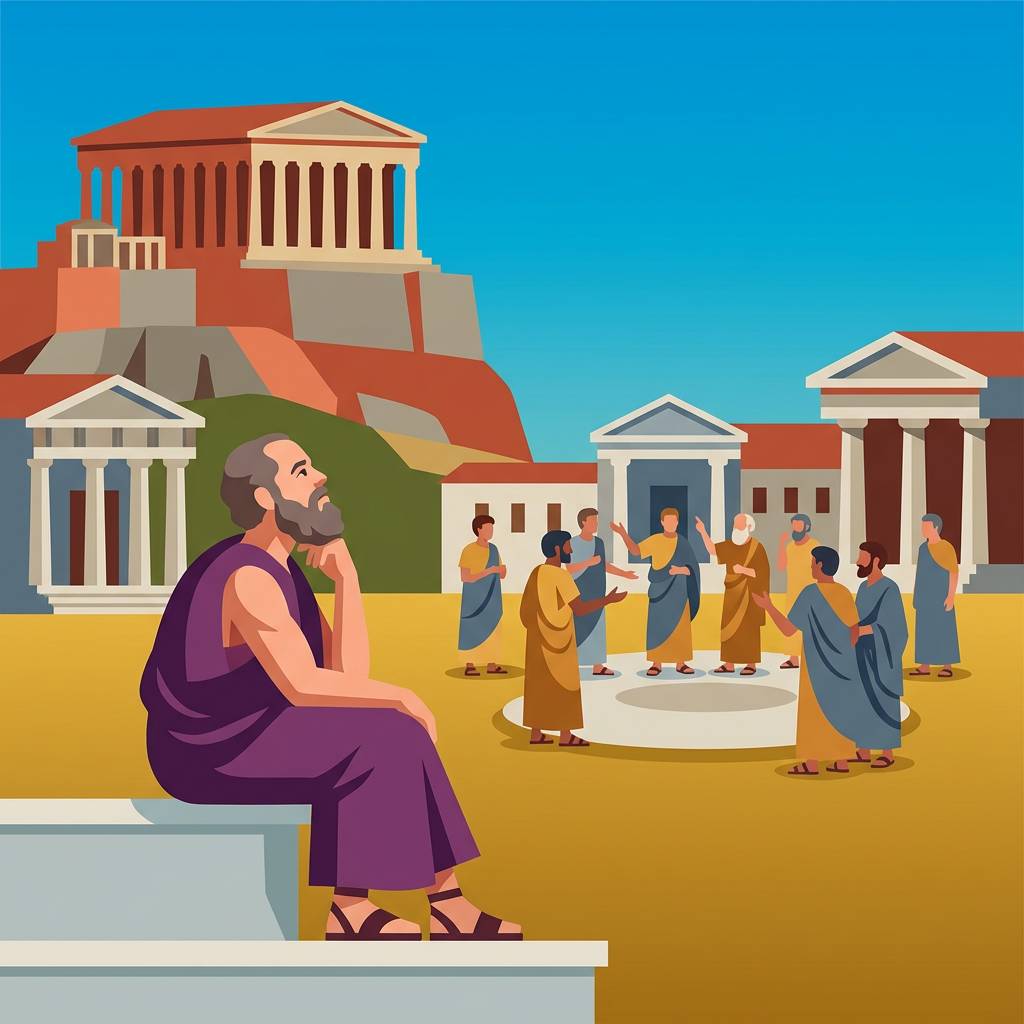
Around 380 BC, Plato, the Greek philosopher and founder of the Academy in Athens, wrote the Republic. The Greek title is Politeia. The dialogue starts from a simple question: what is justice? To answer it, Socrates, the central figure in Plato's dialogues, proposes a surprising detour: build an ideal city in words, Kallipolis, the “beautiful city.”
This is not science fiction. It is an analogy: understand the city in order to understand the soul, and the soul in order to judge power. Alfred North Whitehead, the British philosopher and mathematician, would later say that all of Western philosophy is a series of footnotes to Plato. This book explains why.
The rest is in the Sophia app.The remaining parts, the open-book quiz and the full glossary. Free to start; Premium unlocks everything.
- 2The soul and the city, same blueprint
- 3Who should rule?
- 4The cave: getting out of the illusion
- 5Regimes that rot, a book that lasts
Open-book quiz9 questions whose answers are in the text.
Glossary13 terms explained in a tap.
30 languagesThe same course, from French to Japanese.