
Part 1 of 5 · freeIntroduction
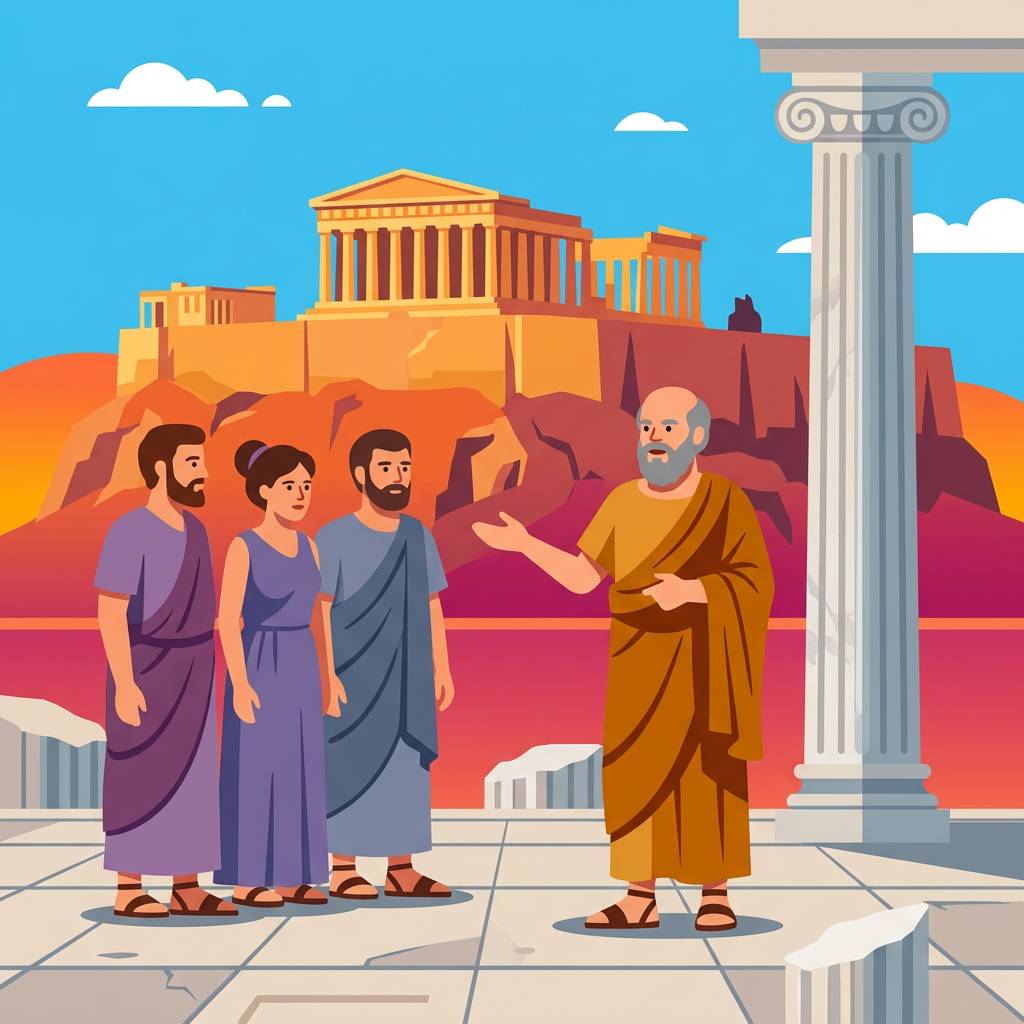
In 399 BC, in Athens, Socrates, the son of a sculptor and a midwife, went on trial. He was accused of failing to honor the gods of the city and of corrupting the young, meaning that he pushed them to question the authorities. The Apology, written by his student Plato, is not an apology in our sense of the word. In Greek, apologia means “defense.”
Socrates does not play the repentant defendant. He turns the court into an examination of the city itself. The verdict will be death by hemlock, a poisonous plant. The scene will become a founding myth of Western thought.
The rest is in the Sophia app.The remaining parts, the open-book quiz and the full glossary. Free to start; Premium unlocks everything.
- 2Why Athens loses patience
- 3“I know that I know nothing”
- 4The verdict, then the provocation
- 5The birth of a philosophical myth
Open-book quiz8 questions whose answers are in the text.
Glossary7 terms explained in a tap.
30 languagesThe same course, from French to Japanese.